


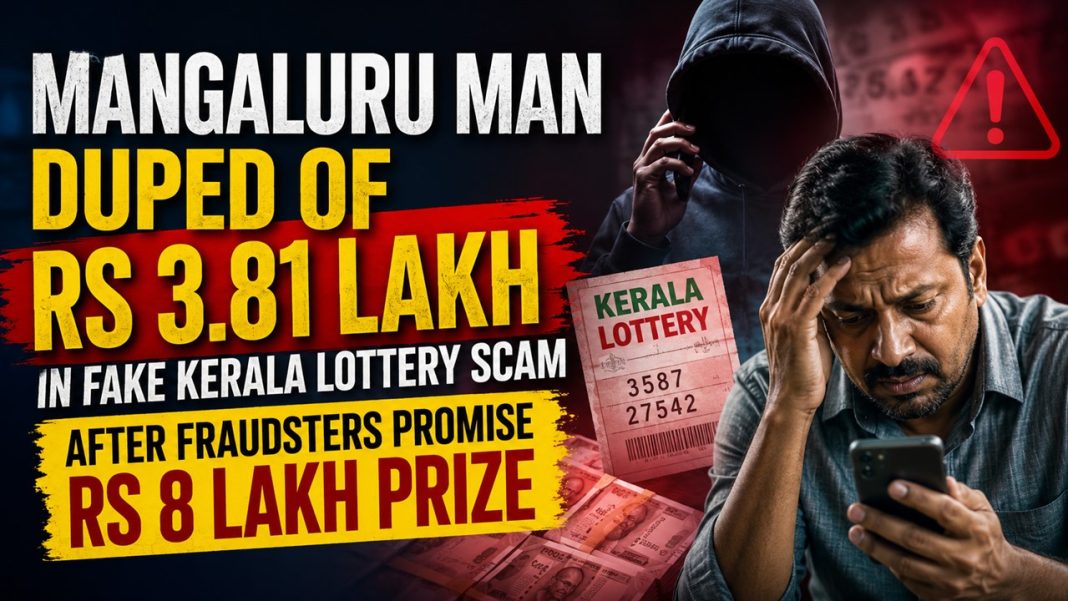
Mangaluru Man Duped of Rs 3.81 Lakh in Fake Kerala Lottery Scam After Fraudsters Promise Rs 8 Lakh Prize
A 42-year-old man from Mangaluru, Karnataka, allegedly lost Rs 3.81 lakh after fraudsters told him that he had won Rs 8 lakh in the Kerala Lottery. The fraudsters reportedly asked him to pay tax to receive the prize money.
The man received a call from an unidentified person on August 14. The caller told him that he had won Rs 8 lakh in the lottery but needed to pay tax before the money could be transferred to his bank account. Believing the claim, the man agreed to make the payment.
The fraudsters later sent payment scanners to him through WhatsApp. According to the police complaint, the victim transferred Rs 3,81,300 in several instalments between August 15 and August 26. He made the payments using Google Pay and PhonePe.
However, even after making the payments, the promised Rs 8 lakh was not transferred to him. The fraudsters then contacted him again and claimed that his lottery prize had doubled. They wanted more tax money to unlock the increased prize amount.
The man was suspicious, the demands were repeated. He later discovered he had been scammed and immediately contacted the cybercrime helpline 1930. Later he lodged a complaint at the CEN Crime Police Station.
Police have registered a case and started an investigation. They are examining the mobile numbers used by the fraudsters, their WhatsApp messages and the bank accounts linked to the payment scanners. Investigators are also tracing the movement of the money to find out where the funds were transferred.
Police are also checking whether the incident is linked to an organised cybercrime network. In such lottery scams, fraudsters usually promise victims a large prize and then demand money for tax, processing fees, registration or verification. After receiving the first payment, they often come up with new reasons to demand more money.
Cybercrime expert and former IPS officer Prof. Triveni Singh said people should be careful about lottery calls that ask for money before releasing a prize. Fraudsters often create excitement and pressure victims into making quick payments.
People should independently check any lottery-related claim with the concerned organisation and should not trust unsolicited calls or messages. Anyone who loses money in an online scam should immediately call the cybercrime helpline 1930. Victims should also keep screenshots of payments, bank transaction details, phone numbers and WhatsApp messages, as these can help police investigate the case.


