


Technical mistake in Form 10 alone is not enough to deny benefit to trust: ITAT
The present appeal has been filed by Senior Citizen Santacruz (Paschim) Sanstha against CIT(A), Mumbai, in the ITAT Mumbai, challenging the order dated September 4, 2025, passed by NFAC, Delhi.
The assessee filed its income tax return for the AY 2017-18 on September 2, 2017, and declared zero income. The trust is properly registered as a charitable organization with DIT(E), under Section 12A, and the Charity Commissioner in Mumbai.
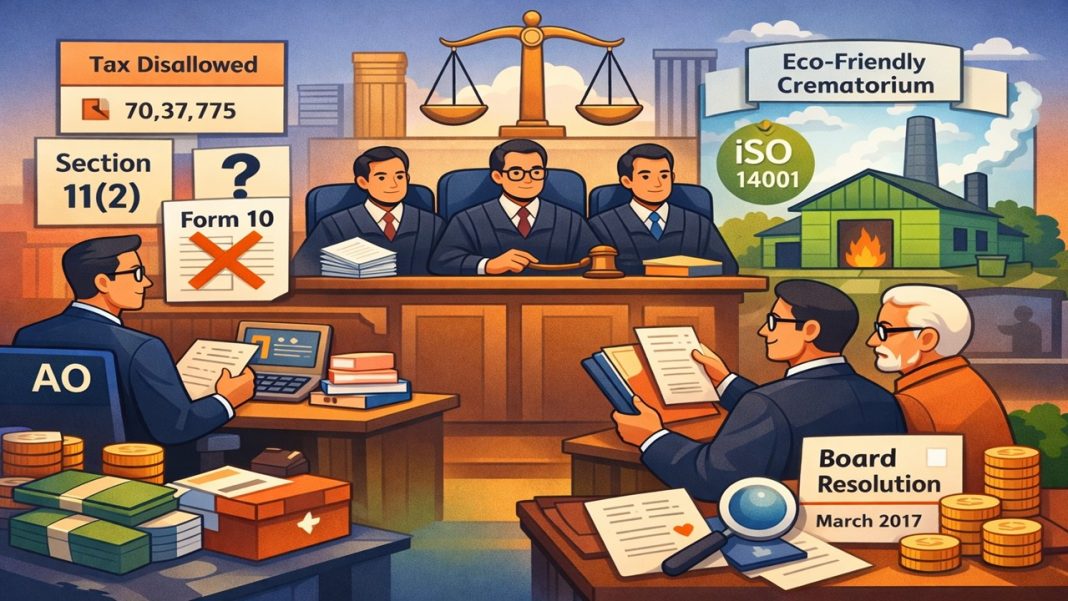
Later, the case for scrutiny. During this investigation, the AO noticed that the trust had claimed a deduction of Rs.70,37,775 under Section 11(2).
While examining Form No. 10, the AO found that the trust had mentioned the purpose of accumulation simply as “charitable purpose.” The AO explained that normally a trust must spend at least 85% of its income on its charitable activities during the year. If it wants to carry forward some income, Section 11(2) allows this, but only if the money is earmarked for a specific future project or purpose. If the money is not used later for that stated purpose, it can be taxed under Section 11(3).
However, AO noted that “charitable purpose” was unclear and did not explain exactly how the money would be used. So he rejected the claim. Based on various court decisions supporting this view, the AO disallowed the deduction of Rs.70,37,775. The assessee filed an appeal before the CIT(A). However, the CIT(A) confirmed the AO’s disallowance.
Being aggrieved with this decision, the assessee filed an appeal before the tribunal. During the hearing, AR submitted that the trust runs an eco-friendly PNG crematorium in Mumbai, including at Santacruz (West). It was set up to improve the environment by providing an eco-friendly piped natural gas crematorium for the benefit of local residents and society.
The sanstha is ISO 14001:2015 certified and started functioning on October 23, 2016. The trust had accumulated funds of about Rs. 70,37,775, which were fully used for the maintenance and development of the eco-friendly crematorium.
While filing Form 10, the trust did not mention the exact purpose of accumulation because all the money was used only for this single objective. There was no intention to hide or misstate any activity, and all donations were used solely for this purpose. However, the AO rejected the claim only because the specific purpose was not mentioned in Form 10. The trust argued that merely not mentioning the specific purpose should not result in denial of exemption under section 11(2), as supported by several High Court and Tribunal decisions. AR also submitted that a major portion of the funds are being spent for crematorium purposes.
The AR explained that the assessee had already given all details about how the funds were used to the AO. The assessee also admitted that there was an unintentional mistake, which was made honestly and without any bad intention, during the assessment proceedings. However, the AO did not consider this explanation and rejected the deduction claimed by the assessee. The AR also pointed out that a copy of the Board Resolution dated March 27, 2017, was submitted to the AO during the assessment proceedings, but it was not taken into account.
After considering all the facts, the tribunal noted that the trust had correctly set aside money under Section 11(2). The only problem raised was that in Form 10, the trust wrote the purpose of accumulation as “charitable in nature” instead of mentioning a detailed purpose.
The Tribunal said this technical mistake alone is not enough to deny the benefit. During assessment, the AO had already asked for details, and the trust clearly explained how and why the funds were set aside. The officer was fully aware of the purpose and never found it false or outside the trust’s objectives.
Based on High Court decisions, the Tribunal held that the claim cannot be rejected just because the purpose was written in general words in Form 10. In conclusion, the tribunal allowed the assessee’s appeal.
Case citation: Senior Citizen Santacruz (Paschim) Sanstha Vs CIT(A) (ITAT Mumbai; I.T.A. No. 7183/Mum/2025; 19/01/2026 ; 2017-18


